


Mastering the Art of Supplements: Your Guide to Smart Choices and Lasting Wellness
- Lulu Langford

- May 7, 2025
- 4 min read
Updated: May 12, 2025
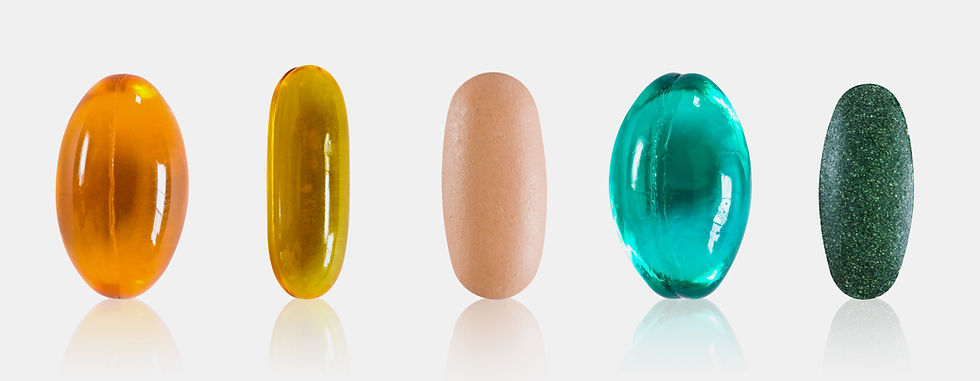
Supplementation plays an important role in supporting health and wellbeing. For most of us, at some point in life, this may take the form of nourishing foods, superfoods, herbal remedies, or targeted nutritional supplements.
However, it’s important to approach supplementation with care. Over time, the field of orthomolecular medicine has become highly medicalised, often shaped by pharmaceutical interests. This has led to the isolation of individual nutrients, the separation of naturally synergistic compounds, and a focus on market-driven trends rather than wholistic balance.
As a result, we now see generations affected by patterns of nutritional imbalance. Thoughtful, personalised guidance is essential to ensure supplementation truly supports whole-body health — working in harmony with, not against, the body’s natural design.
Professional Guidance on Supplementation Choices
Whether you are considering practitioner-only products or over-the-counter supplements, it’s important to understand that the distinction between them is often less significant than it may appear. In today’s market, even within the natural health industry, product promotion can sometimes overshadow genuine, personalised guidance.
To make informed decisions that truly support your individual needs, we recommend consulting with a qualified health professional — someone with a solid background in natural nutrition and integrative healthcare.
If you would like tailored advice or assistance in selecting the right supplementation approach for you, we are pleased to offer integrative online consultations designed to provide thoughtful, evidence-informed recommendations. Please feel welcome to reach out — we are here to help support your health journey.
Importance of Supplementation
The decline in air, soil, water quality, and food preparation methods has led to a growing need for supplementation in our diets. Given the challenges with what is considered food today, incorporating supplements can help bridge nutritional gaps.
Types of Supplements
There are various forms of supplementation available, including liquids, capsules, and tonics. Some remarkable all-rounder products that can benefit everyone of all ages, include:
Probiotics
Daily plant-based multi, phytonutrients & superfoods
Essential fatty acids & omegas
Broad spectrum anti-oxidants and anti-aging combinations
Nutritional Supplementation Considerations
When guiding patients on nutritional supplementation, it is crucial to emphasize the following five key factors:
Broad Spectrum: Seek out multi-nutrient supplements with synergistic compounds to guarantee a comprehensive range of benefits.
Source of Ingredients: Select supplements that are naturally sourced rather than synthetically or pharmaceutically derived to support natural health.
Ethical Considerations: Verify that the products are free from animal ingredients and testing to meet ethical standards.
Quality of Ingredients: Choose organic supplements without fillers or unnecessary additives to ensure purity and effectiveness.
Affordability: Standing by the mission statement that vibrant health is the birthright of every person, cost-effectiveness is key.
Overview of iHerb
Having worked with a number of health companies as well as formal research, one of my favorite supply companies is iHerb. This company has several appealing features:
Free Sign-Up: You can easily create an account without any cost.
No Minimum Orders: There are no monthly order requirements, allowing for flexibility.
No Pressure: Customers can shop at their own pace without feeling rushed.
Discounted Products: All products are offered at discounted prices.
Product Sourcing and Search
The products available on iHerb are sourced from around the world. It is incredibly easy to find the best products for your needs through a simple online search.
Loyalty Program
One of the standout features of iHerb is the loyalty program. With each order, customers earn points that can be redeemed for discounts on future purchases, making it an attractive option for regular shoppers.
References
Holford, P., Carr, A. C., Jansen, R., & Vizcaychipi, M. P. (2020). Vitamin C—An Adjunctive Therapy for Respiratory Infection, Sepsis and COVID-19. Nutrients, 12(12), 3760. https://doi.org/10.3390/nu12123760
Mason, J. B., Dickstein, A., Jacques, P. F., Haggarty, P., Selhub, J., Dallal, G., & Rosenberg, I. H. (2022). A comparison of synthetic and food-derived multinutrient supplements on nutrient bioavailability and health outcomes. American Journal of Clinical Nutrition, 115(4), 832–840. https://doi.org/10.1093/ajcn/nqac030
Karkos, P. D., Leong, S. C., Karkos, C. D., Sivaji, N., & Assimakopoulos, D. A. (2011). Spirulina in clinical practice: Evidence-based human applications. Journal of Alternative and Complementary Medicine, 17(4), 1–6. https://doi.org/10.1089/acm.2010.0085
Rajman, L., Chwalek, K., & Sinclair, D. A. (2018). Therapeutic potential of NAD-boosting molecules: The in vivo evidence. Cell Metabolism, 27(3), 529–547. https://doi.org/10.1016/j.cmet.2018.02.011
Berman, A. Y., Motechin, R. A., Wiesenfeld, M. Y., & Holz, M. K. (2020). The therapeutic potential of resveratrol: A review of clinical trials. NPJ Precision Oncology, 4(1), 29. https://doi.org/10.1038/s41698-020-00121-9
López-Otín, C., Blasco, M. A., Partridge, L., Serrano, M., & Kroemer, G. (2013). The hallmarks of aging. Cell, 153(6), 1194–1217. https://doi.org/10.1016/j.cell.2013.05.039
Calder, P. C. (2013). Omega-3 polyunsaturated fatty acids and inflammatory processes: Nutrition or pharmacology? British Journal of Clinical Pharmacology, 75(3), 645–662. https://doi.org/10.1111/j.1365-2125.2012.04374.x
Lopresti, A. L. (2018). The problem of curcumin and its bioavailability: Could its gastrointestinal influence contribute to its overall health-enhancing effects? Advances in Nutrition, 9(1), 41–50. https://doi.org/10.1093/advances/nmx011
Ouwehand, A. C., Salminen, S., & Isolauri, E. (2002). Probiotics: An overview of beneficial effects. Antonie Van Leeuwenhoek, 82(1–4), 279–289. https://doi.org/10.1023/A:1020620607611


Comments